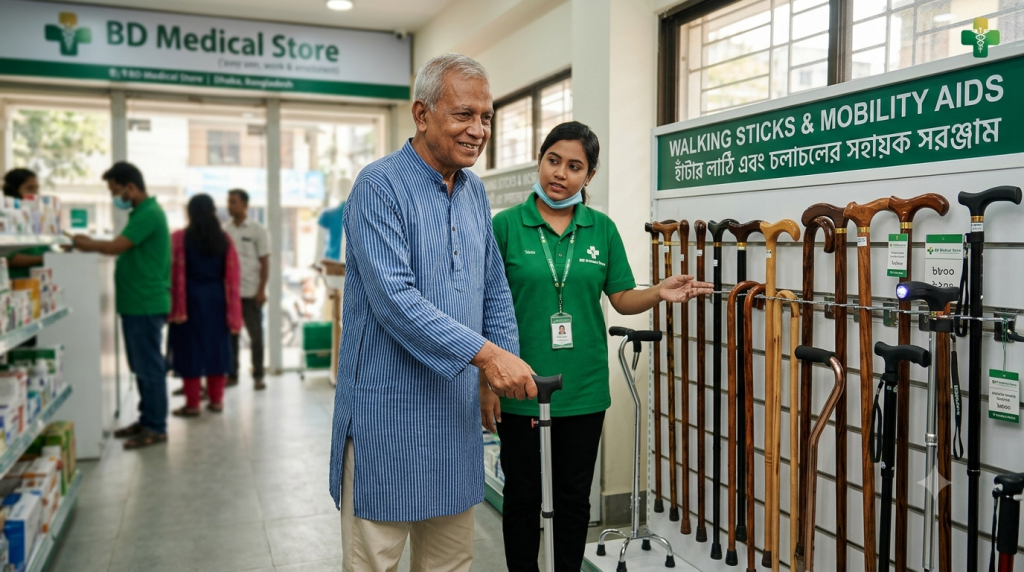
The Ultimate Guide to Walking Sticks: Selection, Craftsmanship, and Use
Introduction to Walking Mobility Aids
Navigating daily life with confidence requires stability, support, and the right tools. Whether you are recovering from a sudden joint injury, managing a chronic condition like arthritis, or simply looking for added balance during evening strolls, choosing the right mobility aid can transform your independence. Every individual has unique physical needs, body proportions, and lifestyle demands, meaning that there is no one-size-fits-all approach to walking support. Understanding how different devices function helps you make an informed decision that enhances both comfort and safety.
At BD medical store, we recognize that purchasing mobility equipment is deeply personal and vital for maintaining an active lifestyle. From lightweight adjustable aluminum models to handcrafted wooden designs, modern mobility aids blend ergonomic engineering with daily practicality. Selecting a quality walking stick is not just about having something to lean on; it is about restoring fluid movement, reducing joint strain, and preventing painful falls. By exploring physical mechanics, design variations, and maintenance strategies, you can select a tool that fits your routine perfectly.
The Mechanics of Human Balance and Support
Human locomotion relies on a complex interaction between the muscular system, skeletal structure, and central nervous system. When injuries occur or age weakens muscle tone, our center of gravity shifts, making standard walking patterns unstable and tiring. Using a support device widens your base of support, redistributing weight away from vulnerable lower-body joints like knees, hips, and ankles onto the stronger muscles of the arms and upper torso.
This redistribution reduces joint impact force by up to 25 percent with every step you take. By absorbing ground reaction forces, a well-fitted aid lightens the burden on damaged cartilage and strained ligaments. When you place the tip firmly on the ground, it stabilizes your gait, allowing you to walk longer distances without experiencing rapid fatigue or sharp physical discomfort.
Historical Evolution of Walking Supports
For thousands of years, humans have relied on sturdy wooden branches for balance during long journeys across rough terrain. Over centuries, these basic wooden branches transformed from simple survival tools into symbols of social status, authority, and refined craftsmanship across various cultures. During the 17th and 18th centuries in Europe, carrying a decorated cane was considered an essential fashion statement for gentlemen, featuring elaborate handles made from brass, ivory, or carved silver.
As medical science advanced throughout the 20th century, the focus shifted dramatically from cosmetic fashion back to functional health and ergonomic design. Metallurgists and medical engineers began utilizing lightweight aluminum alloys, shock-absorbing rubber tips, and height-adjustable locking mechanisms. Today, mobility tools combine historical artistic design with cutting-edge biomechanical features to serve diverse medical needs across the globe.
Understanding Different Types of Mobility Aids
                  ┌─────────────────────────────────────────┐
                  │    Primary Walking Support Options      │
                  └────────────────────┬────────────────────┘
                                       │
        ┌──────────────────────────────┼──────────────────────────────┐
        │                              │                              │
┌───────┴───────┐              ┌───────┴───────┐              ┌───────┴───────┐
│ Single-Point  │              │  Multi-Leg    │              │ Crutches &    │
│    Sticks     │              │    Sticks     │              │ Special Aids  │
└───────┬───────┘              └───────┬───────┘              └───────┬───────┘
        │                              │                              │
        ├─ Wooden                      ├─ Quad-Base                   ├─ Elbow Crutches
        ├─ Adjustable Aluminum         ├─ Wide-Base Quad              ├─ Folding Seat
        └─ Anodized Metal              └─ Tripod Models               └─ Smart Canes
Standard Single-Point Canes
The classic single-point cane remains the most popular choice for individuals who require minor balance assistance or mild weight offloading. Featuring a straight shaft terminating in a single durable rubber tip, this design provides smooth, natural movement on flat surfaces. It is ideal for users who still maintain good overall coordination but need a touch of extra stability during daily activities.
Because single-point models are lightweight and compact, they are exceptionally easy to carry through crowded urban areas or public transit. You can find these crafted from traditional hardwood or lightweight tubular aluminum equipped with push-button height adjustments. For light daily support, a standard single-point model provides an optimal balance between subtle style and reliable functional help.
Wooden Styles and Aesthetics
Traditional timber options offer a timeless appearance that appeals to users who value aesthetic beauty alongside functional support. Crafted from hardwoods like mahogany, teak, oak, or walnut, these models are sturdy and comfortable to hold. To explore traditional timber choices and their current pricing, checking the wooden walking stick price in Bangladesh helps you find a stylish design within your budget.
Each wooden piece features unique natural grain patterns and rich polished finishes, making it feel more like a personal accessory than a medical device. However, wooden models must be custom-trimmed to the correct height by cutting the bottom shaft, meaning they cannot be readjusted once trimmed. Regular care, like keeping the wood away from excessive moisture, preserves its surface finish for years.
Adjustable Metal Varieties
If you prefer versatility and easy height modification, adjustable aluminum models offer great practical advantages over fixed wooden designs. These products feature telescoping shafts with dual-button locking pins and threaded locking collars to eliminate rattling noises while walking. You can quickly adjust the height to match flat shoes, thick sneakers, or formal footwear.
Furthermore, metallic models often come with contoured offset handles that distribute your body weight directly down the center of the shaft. This ergonomic design reduces strain on your wrist joint during extended use. They are also rust-resistant, making them durable companions for walking outdoors during rainy weather or humid conditions.
Multi-Leg and Quad Canes
When standard single-point models do not provide enough balance control, multi-leg designs offer maximum ground contact and structural stability. These devices feature a wider base extending into three or four separate feet, each fitted with slip-resistant rubber caps. They are frequently prescribed for patients recovering from strokes, neurological conditions, or severe lower-limb weakness.
Multi-leg options stand upright on their own when released, eliminating the need to lean them against walls or tables where they might fall over. While they are slightly heavier than single-point options, the enhanced security they offer gives users confidence when navigating indoor environments independently.
Four-Point Quad Designs
A walking stick with 4 legs provides a broad, stable footprint that significantly reduces wobbling during movement. The four-point base comes in small or wide layouts, depending on how much clearance you need for your feet while walking. The wider base provides superior stability, while the smaller base makes it easier to navigate narrow staircases and tight hallways.
                  ┌─────────────────────────────────┐
                  │    Quad Base Configuration      │
                  └────────────────┬────────────────┘
                                   │
                  ┌────────────────┴────────────────┐
                  │                                 │
         ┌────────┴────────┐               ┌────────┴────────┐
         │ Small-Base Quad │               │  Wide-Base Quad │
         └────────┬────────┘               └────────┬────────┘
                  │                                 │
                  ├─ Tight Hallways                 ├─ Maximum Balance
                  ├─ Stair Navigation               ├─ Heavy Support
                  └─ Compact footprint              └─ Stationary Stand
For older individuals managing chronic leg weakness or vestibular disorders, a four-leg design provides stable ground placement with every step. When shopping for reliable quadripartite stability aids, checking the old man stick price in Bangladesh ensures you select a sturdy, cost-effective model designed for daily senior care.
Tripod Stability Options
Tripod designs strike a balance between lightweight single-point models and heavier four-point quad options. Featuring three wide legs, these units offer strong rotational stability while staying light enough for smooth forward movement. They excel on uneven outdoor surfaces like gravel pathways, grassy parks, or slightly sloped pavement.
The three-point layout offers ample foot clearance, reducing the risk of tripping over the base while taking fast strides. Many tripod models also feature built-in folding seats, allowing users to pause and rest during long walks around town or while waiting in lines.
Specialized Medical Crutches and Structural Supports
Severe orthopedic injuries, structural fractures, and surgical rehabilitation require specialized support devices beyond standard balance canes. Medical crutches distribute body weight across the upper arms, shoulders, and hands, taking pressure completely off an injured leg. Understanding your specific recovery plan helps you choose between forearm crutches and traditional underarm options.
To compare local options and current market rates for orthopedic recovery gear, review the Medical Walking Stick price to select an appropriate support system. Using properly fitted crutches prevents improper gait habits that could trigger secondary back or hip pain during physical rehabilitation.
| Support Type | Primary Medical Use | Mobility Level | Base Stability |
| :--- | :--- | :--- | :--- |
| **Single-Point** | Mild balance assistance, light arthritis | High mobility | Low |
| **Quad (4 Legs)** | Stroke recovery, severe balance deficits | Moderate mobility | Very High |
| **Elbow Crutch** | Non-weight-bearing recovery, fractures | Controlled mobility | High |
| **Folding Chair** | Fatigue management, endurance limits | Variable mobility | Medium |
Elbow and Forearm Crutches
Elbow crutches feature a open or hinged plastic cuff that secures around the forearm along with a horizontal handle grip. This dual-contact design distributes weight across the entire forearm rather than concentrating force exclusively on your palms and wrists. To find an ergonomic support for lower-limb recovery, examine the Elbow Crutch price in Bangladesh before making a decision.
Because the cuff holds the crutch securely on your arm, you can use your hands to open doors or answer calls without dropping your support. Forearm crutches offer greater control during fast walking and are the preferred long-term mobility solution for active individuals across Europe and Asia.
                      ┌───────────────────────────┐
                      │    Elbow Crutch Design    │
                      └─────────────┬─────────────┘
                                    │
                       ┌────────────┴────────────┐
                       │   Flex Forearm Cuff     │
                       └────────────┬────────────┘
                                    │
                       ┌────────────┴────────────┐
                       │  Ergonomic Hand Grip    │
                       └────────────┬────────────┘
                                    │
                       ┌────────────┴────────────┐
                       │ Telescoping Shaft Pin   │
                       └────────────┬────────────┘
                                    │
                       ┌────────────┴────────────┐
                       │   Heavy-Rubber Tip      │
                       └─────────────────────────┘
For targeted rehabilitation, you can also consider buying a Single Crutch price in Bangladesh to transition smoothly from two crutches back to independent walking. Using a single forearm crutch on your stronger side helps retrain a natural walking pattern while keeping weight off the healing limb.
Underarm Axillary Crutches
Axillary crutches are standard equipment in emergency rooms for treating acute lower-leg injuries like sprained ankles or fractured bones. They extend from the underarm area down to the floor, controlled by handgrips located midway down the frame. When fitted properly, body weight rests on your hands rather than directly on your armpits to avoid nerve compression.
While effective for short-term recovery, axillary crutches require significant upper-body strength and can prove tiring over long distances. They are best suited for young, active individuals recovering from temporary injuries who need to keep weight off one leg entirely.
Smart and Ergonomic Innovations
Technological Advances in Smart Canes
Modern technological innovation has transformed the traditional walking stick into an intelligent health-monitoring system. Today’s smart designs feature electronic components, obstacle detection sensors, built-in LED illumination, and emergency panic alarms. These advances provide enhanced safety, particularly for visually impaired individuals or elderly users navigating dark spaces at night.
Smart models often feature rechargeable lithium-ion batteries that power bright forward-facing LED lights, illuminating dark staircases, curbs, and thresholds. Some models also include red flashing safety lights to alert motorists when you are walking along roads at night.
Sensors, Navigation, and Safety Systems
Advanced smart models incorporate ultrasonic sensors near the base to scan for ground obstacles, open potholes, or low-hanging branches ahead. When the sensor detects a hazard, the handle vibrates to alert you before an impact occurs. Integrated GPS modules can sync with smartphone applications, allowing family members to track your location in real time.
Additionally, built-in fall-detection sensors automatically trigger a loud alarm if the cane drops suddenly onto the floor. To assess these modern safety options for your home, review the smart walking stick price in Bangladesh to choose a protective model that fits your budget.
                     ┌──────────────────────────────┐
                     │ Smart Cane Electronic Suite  │
                     └──────────────┬───────────────┘
                                    │
         ┌──────────────────────────┼──────────────────────────┐
         │                          │                          │
┌────────┴─────────┐       ┌────────┴─────────┐       ┌────────┴─────────┐
│ Ultrasonic Alert │       │ LED Illumination │       │ Fall Detection   │
└────────┬─────────┘       └────────┬─────────┘       └────────┬─────────┘
         │                          │                          │
         ├─ Proximity Sensors       ├─ Path Spotlight          ├─ Impact Sensors
         ├─ Handle Vibration        ├─ Rear Safety Flasher     ├─ Local Alarm
         └─ Obstacle Detection      └─ Night Visibility        └─ GPS Sync Alert
Price Points for Tech-Enabled Devices
Because smart models include electronic sensors, Bluetooth connectivity, and internal batteries, they are priced higher than standard manual options. However, the additional safety and peace of mind they offer make them a worthwhile investment for high-risk users.
To find an option with features like panic buttons, LED lights, or vibration alerts, review the Smart walking stick price in Bangladesh across local outlets. Always choose models with water-resistant battery compartments so electronic features continue functioning reliably during unexpected rainstorms.
Dual-Purpose Convertible Designs
Convertible mobility aids offer multipurpose functionality for users who manage fatigue or balance issues while out in public. These products serve as a stable walking support while moving, then convert into a resting seat when you need a break. This dual functionality is ideal for long walks through parks, shopping centers, or outdoor events.
By providing a reliable resting spot, convertible designs help users manage physical fatigue and continue enjoying outdoor activities. They are built from lightweight aluminum alloys to keep them easy to carry while moving.
Seat Combinations
A walking stick chair combines a sturdy walking shaft with a folding tripod seat. When folded shut, the seat aligns flush against the frame, allowing you to swing the device naturally as you walk. When opened, it forms a stable three-legged stool for quick resting breaks during long outings.
                    ┌───────────────────────────────┐
                    │  Folding Chair Mechanism      │
                    └───────────────┬───────────────┘
                                    │
                       ┌────────────┴────────────┐
                       │ Closed: Walking Support │
                       └────────────┬────────────┘
                                    │
                       ┌────────────┴────────────┐
                       │ Release Security Latch  │
                       └────────────┬────────────┘
                                    │
                       ┌────────────┴────────────┐
                       │ Open: Tripod Resting    │
                       │          Chair          │
                       └─────────────────────────┘
These convertible seats are helpful for elderly individuals who experience lower back pain or leg weakness when standing for extended periods. When evaluating convertible seating options, check the walking stick price across local distributors to select a comfortable model.
Emergency Stretchers and Mobility Aids
In emergency situations, medical facilities and rescue teams rely on specialized convertible equipment to transport injured individuals safely. Convertibles designed for emergency response can switch quickly between upright supports and flat transportation stretchers.
To review emergency medical equipment costs and specifications for clinics or home care, check the walking stretcher price in Bangladesh from licensed medical suppliers. Having access to versatile emergency equipment ensures quick, safe handling during health emergencies or sudden injuries.
Key Factors for Selecting the Ideal Support
                 ┌─────────────────────────────────────┐
                 │   Selection Considerations Matrix   │
                 └──────────────────┬──────────────────┘
                                    │
        ┌───────────────────────────┼───────────────────────────┐
        │                           │                           │
┌───────┴───────┐           ┌───────┴───────┐           ┌───────┴───────┐
│ User Physics  │           │ Handle Shapes │           │ Material Tech │
└───────┬───────┘           └───────┬───────┘           └───────┬───────┘
        │                           │                           │
        ├─ Precise Height           ├─ Tourist / Crook          ├─ Wood / Timber
        ├─ Weight Capacity          ├─ Derby Contour            ├─ Aluminum Alloy
        └─ Balance Needs            └─ Offset / Ergonomic       └─ Carbon Fiber
Matching User Needs with Mobility Aids
Choosing the right mobility device starts with a clear assessment of your physical health, balance, strength, and daily lifestyle. A light balance aid will not provide enough support for someone recovering from major joint surgery, while heavy quad options might feel unnecessarily bulky for simple walks. Consulting a physical therapist helps clarify your primary mobility goals before buying.
If you are recovering from a temporary leg fracture, prioritize lightweight aluminum options with soft foam handles and wide rubber bases. If you are managing chronic balance challenges, look for broad-based multi-leg designs with high weight capacities to ensure long-term stability.
Injury Recovery Solutions
When managing acute injuries like torn ligaments or hairline bone fractures, selecting a specialized walking stick for broken leg conditions helps protect the limb while healing. During early recovery, keeping weight off the injury is critical to prevent complications and allow bone tissues to align correctly.
Using an adjustable aluminum model or forearm crutch on your non-injured side allows you to bypass painful ground impact entirely. As your physical strength improves, you can gradually transition to lighter, single-point options under professional guidance.
Senior Support Solutions
As body flexibility and muscle volume naturally decrease with age, older adults benefit from lightweight support devices with ergonomic grip handles. Finding a reliable walking stick for old man daily use involves prioritizing balance assistance, comfortable handle contours, and low overall frame weight.
Ergonomic designs reduce joint stress, making it easier for seniors to enjoy daily walks without experiencing hand cramps or shoulder pain. To compare current options and features for home care, review the walking stick price in Bangladesh to pick a durable model.
Ergonomic Handle Profiles
The handle design of your mobility device directly affects wrist positioning, hand comfort, and long-term joint safety. A poorly shaped handle can cause skin blisters, wrist fatigue, or nerve pinching in your palm over extended use. Choosing a grip that fits your hand size helps ensure comfortable, pain-free mobility every day.
                  ┌─────────────────────────────────┐
                  │    Handle Profile Variations    │
                  └────────────────┬────────────────┘
                                   │
        ┌──────────────────────────┼──────────────────────────┐
        │                          │                          │
┌───────┴───────┐          ┌───────┴───────┐          ┌───────┴───────┐
│ Tourist Crook │          │ Derby Contour │          │ Offset Handle │
└───────┬───────┘          └───────┬───────┘          └───────┬───────┘
        │                          │                          │
        ├─ Hooked design           ├─ T-shape flat top        ├─ Padded foam
        ├─ Easy hanging            ├─ Hand-spread pressure    ├─ Weight centering
        └─ Traditional style       └─ Wrist stress relief     └─ Joint relief
Derby, Fritz, and Crook Handles
The traditional crook handle features a classic curved hook that lets you hang the cane easily over your arm or a chair edge when not in use. However, its rounded shape concentrates pressure onto a narrow area of your palm, which can feel uncomfortable during long walks.
The Derby handle features a flat top surface contoured to fit your hand, spreading downward pressure evenly across your entire palm. Similarly, the Fritz handle uses an offset forward curve designed to ease stress for users with hand arthritis or joint stiffness.
Offset and Padded Options
Offset handles curve outward before centering directly over the main vertical shaft, directing your downward body weight down the center of the tip. This design provides excellent stability while minimizing wrist twisting, making it ideal for individuals who lean heavily on their support stick.
Adding soft closed-cell foam or gel padding to your handle further dampens ground vibrations with every step. Gel padding reduces skin pressure points, helping prevent blisters and calluses during long daily walks outdoor.
Materials, Durability, and Weight Capacities
The material composition of your mobility aid determines its frame weight, structural strength, and overall durability over time. Modern manufacturing uses hardwoods, aircraft-grade aluminum, and carbon fiber to provide strong support for users of all sizes.
Always review the weight capacity ratings provided by the manufacturer before making a purchase. Standard designs support up to 250 pounds, while heavy-duty bariatric models can safely support weight capacities up to 500 pounds.
| Material Type | Frame Weight | Weight Capacity | Best Application |
| :--- | :--- | :--- | :--- |
| **Hardwood** | Moderate (1.5 - 2.0 lbs) | 200 - 250 lbs | Traditional style, light balance |
| **Aluminum** | Light (0.8 - 1.2 lbs) | 250 - 300 lbs | Everyday use, height adjustments |
| **Bariatric Steel**| Heavy (2.5 - 4.0 lbs) | 400 - 500 lbs | Heavy weight-bearing support |
Sizing, Fitting, and Correct Technique
How to Correctly Measure for Height
Using a mobility device with incorrect height settings can throw off your posture, causing lower back tightness, shoulder strain, and uneven walking steps. A support stick that is set too high forces your shoulder upward, while one that is too low causes you to stoop forward while walking. Measuring height accurately ensures proper posture, stability, and comfort.
To measure correctly, put on your everyday walking shoes and stand upright on a flat surface with your arms resting naturally at your sides. Measure the distance from the wrist crease on the inside of your arm down to the floor. This measurement gives you the ideal height from the top of the handle grip to the bottom of the rubber tip.
                 ┌───────────────────────────────────┐
                 │    Height Measurement Steps       │
                 └─────────────────┬─────────────────┘
                                   │
                    ┌──────────────┴──────────────┐
                    │ Wear Daily Walking Footwear │
                    └──────────────┬──────────────┘
                                   │
                    ┌──────────────┴──────────────┐
                    │ Stand Upright, Arms Relaxed │
                    └──────────────┬──────────────┘
                                   │
                    ┌──────────────┴──────────────┐
                    │ Measure Wrists-to-Floor Line│
                    └──────────────┬──────────────┘
                                   │
                    ┌──────────────┴──────────────┐
                    │ Set Handle at Wrist Crease  │
                    └─────────────────────────────┘
Step-by-Step Measurement Guide
-
Stand up straight against a wall wearing your standard daily walking shoes.
-
Relax your arms and shoulders, letting your hands hang naturally down by your sides.
-
Have a friend place a measuring tape from the floor straight up to the joint crease on the inside of your wrist.
-
Set your adjustable cane to this exact height, or trim a wooden model shaft accordingly.
-
Grasp the handle; your elbow should bend comfortably at a 15-to-20-degree angle.
Biomechanical Principles of Correct Walking
A common mistake is holding the support stick on the same side as the weak or injured leg. To maintain natural balance, you should always hold the device in the hand opposite your injured or weaker leg. This arrangement mimics your body’s natural arm-swing pattern, keeping your posture centered while walking.
When you step forward with your injured leg, move the support stick forward at the exact same time. This matches your weight distribution, allowing the device to absorb impact force while taking pressure off the healing limb.
                     ┌──────────────────────────────┐
                     │  Correct Gait Coordination   │
                     └──────────────┬───────────────┘
                                    │
                       ┌────────────┴────────────┐
                       │ Hold Stick in OPPOSITE  │
                       │   Hand to Weak Leg      │
                       └────────────┬────────────┘
                                    │
                       ┌────────────┴────────────┐
                       │ Advance Weak Leg AND    │
                       │   Stick Together        │
                       └────────────┬────────────┘
                                    │
                       ┌────────────┴────────────┐
                       │ Step Past with Strong   │
                       │     Leg Smoothly        │
                       └─────────────────────────┘
Level Surface Navigation
When walking on flat indoor floors or sidewalks, focus on keeping your movements smooth and steady. Place the rubber tip firmly on the ground about two to three inches forward and outward from your foot to prevent tripping. Avoid planting the tip too far out to the side, which forces you to lean unnaturally and off-balances your torso.
Look forward while walking rather than staring down at your feet. Keeping your gaze forward helps maintain upright head posture and improves overall physical balance.
Staircase Navigation Rules
Navigating staircases safely requires memorable golden rules to prevent dangerous trips or backward falls. When climbing stairs, remember the phrase: “Up with the Good, Down with the Bad.” Always step up with your stronger leg first, followed by your weaker leg and the support stick together onto the same step.
                  ┌──────────────────────────────────┐
                  │    Stair Navigation Protocols    │
                  └────────────────┬─────────────────┘
                                   │
        ┌──────────────────────────┴──────────────────────────┐
        │                                                     │
┌───────┴───────┐                                     ┌───────┴───────┐
│ ASCENDING (UP)│                                     │DESCENDING(DOWN│
└───────┬───────┘                                     └───────┬───────┘
        │                                                     │
        ├─ 1. Strong Leg First                                ├─ 1. Stick Down First
        ├─ 2. Weak Leg Up                                     ├─ 2. Weak Leg Down
        └─ 3. Bring Stick Up                                  └─ 3. Strong Leg Last
When descending stairs, reverse the sequence completely to maintain control over your center of gravity. Place your support stick down onto the lower step first, step down with your weaker leg, and finally bring your stronger leg down to meet them.
Maintenance, Accessories, and Safety
Essential Accessories and Replacements
To keep your equipment performing safely over time, inspect and care for its high-wear components regularly. The rubber tip at the base of the shaft is your primary point of traction; it prevents slipping on wet tiles or slick pavement. Once the tread on the rubber tip wears down, replace it immediately to maintain reliable floor grip.
Adding a wrist strap prevents your support device from falling to the floor whenever you release your grip to pay for items or open doors. Ice grips with steel spikes can also be attached to the base for secure traction on icy winter sidewalks.
                      ┌───────────────────────────┐
                      │ High-Wear Component Check │
                      └─────────────┬─────────────┘
                                    │
                       ┌────────────┴────────────┐
                       │ Check Rubber Tread Depth│
                       └────────────┬────────────┘
                                    │
                       ┌────────────┴────────────┐
                       │ Tighten Lock Pins/Rings │
                       └────────────┬────────────┘
                                    │
                       ┌────────────┴────────────┐
                       │ Inspect Foam Grip Surface│
                       └────────────┬────────────┘
                                    │
                       ┌────────────┴────────────┐
                       │ Clean Mud and Debris    │
                       └─────────────────────────┘
Routine Maintenance Procedures
-
Weekly Tread Inspections: Check the bottom rubber tip for smooth spots, cracking, or uneven wear patterns.
-
Lock Pin Verification: Ensure telescoping adjustment buttons snap securely into their positioning holes.
-
Collar Tightening: Hand-tighten the threaded locking collar below the handle to eliminate frame movement.
-
Surface Cleaning: Wipe down metal shafts and synthetic handles using a damp cloth and mild liquid soap.
-
Wood Polishing: Apply specialized furniture polish to timber models to preserve the protective finish.
Common Safety Hazards to Avoid
Avoid placing the rubber tip directly on loose rugs, wet bathroom tiles, or oily pavement where traction is compromised. Keep path areas clear of household clutter, electrical cords, and pet toys that could catch on the base of your support stick.
When standing up from an armless chair, do not pull upward on your support device to pull yourself standing. Instead, push off firm chair armrests using both hands until standing, then grasp your walking handle to establish balance.
Sourcing Quality Mobility Equipment in Bangladesh
Finding reliable medical equipment requires choosing trustworthy vendors that offer certified products, clear warranties, and knowledgeable customer service. Whether you are searching online for a walking stick shop near me or visiting local stores in person, selecting specialized medical suppliers ensures you receive high-quality mobility gear.
Specialized medical shops stock a wide range of options, including single-point sticks, multi-leg quad models, forearm crutches, and smart mobility aids. To compare costs and features across popular local items, review the walking stand price in Bangladesh before making your decision.
When looking for an authorized walking stick shop in dhaka, visit BD medical store to view quality equipment in person. Their experienced team helps measure appropriate heights, demonstrates correct walking techniques, and recommends ideal products for your recovery needs.
Similarly, if you are looking for a walking hand stick shop near me in your neighborhood, choosing a dedicated medical supplier guarantees authentic products from certified manufacturers. Investing in durable mobility equipment provides dependable physical support, comfort, and peace of mind for years to come.
Conclusion
Restoring your physical mobility and independence starts with selecting the right support equipment for your unique lifestyle needs. Whether you choose a classic wooden model, an adjustable aluminum single-point stick, a broad-based four-leg quad cane, or an advanced electronic smart model, picking the right device helps protect your joints, improves balance, and prevents dangerous falls. By measuring appropriate handle heights, learning proper stair navigation rules, and maintaining rubber tips regularly, you ensure smooth, comfortable, and secure mobility everywhere you go. Visit BD medical store today to explore high-quality mobility aids designed to keep you moving with confidence.
Frequently Asked Questions (FAQs)
Q1: What is the current medical walking stick price in Bangladesh?
A: The medical walking stick price in Bangladesh varies based on design, frame material, and special features. Basic single-point aluminum models start around 500 to 800 BDT, while sturdy wooden options range between 1,000 and 2,500 BDT. Advanced quad-base models or convertible seat options generally cost between 1,500 and 4,500 BDT.
Q2: How do I find a reliable walking hand stick shop near me?
A: To find a trusted mobility store nearby, search online for authorized medical suppliers or visit established health equipment districts. You can also visit BD medical store online or at their physical location to inspect certified products, compare designs, and receive professional assistance with height fitting.
Q3: What is the difference between a single-point stick and a walking stick with 4 legs?
A: A single-point design features one rubber tip at the base, making it lightweight and ideal for minor balance support. A walking stick with 4 legs features a wider four-point base that stands upright independently, providing maximum ground stability for individuals managing stroke recovery or severe weakness.
Q4: How do I know if my walking aid is set at the correct height?
A: Stand upright wearing your regular daily shoes with your arms relaxed naturally at your sides. The top handle grip should line up with the wrist crease on the inside of your arm. When gripping the handle, your elbow should bend comfortably at a 15-to-20-degree angle.
Q5: What is the average hand crutches price in Bangladesh for injury rehabilitation?
A: The Hand crutches price in Bangladesh typically ranges from 1,200 to 3,500 BDT per pair, depending on whether you choose traditional underarm models or adjustable aluminum forearm crutches. High-end ergonomic crutches with padded grips and shock-absorbing rubber tips sit at the higher end of that price spectrum.
Q6: Should I hold my walking support on the same side as my injured leg?
A: No, you should always hold your support device in the hand opposite your injured or weaker leg. Holding it on the opposite side mimics your body’s natural arm-swing pattern, shifting weight away from the injured limb and maintaining natural posture while walking.
Q7: Are smart walking sticks worth the higher price point?
A: Yes, smart models offer valuable added safety features like forward-facing LED path lights, obstacle-detection sensors, fall-detection alarms, and GPS location tracking. They are highly recommended for elderly users or visually impaired individuals who frequently navigate dark spaces or outdoors at night.