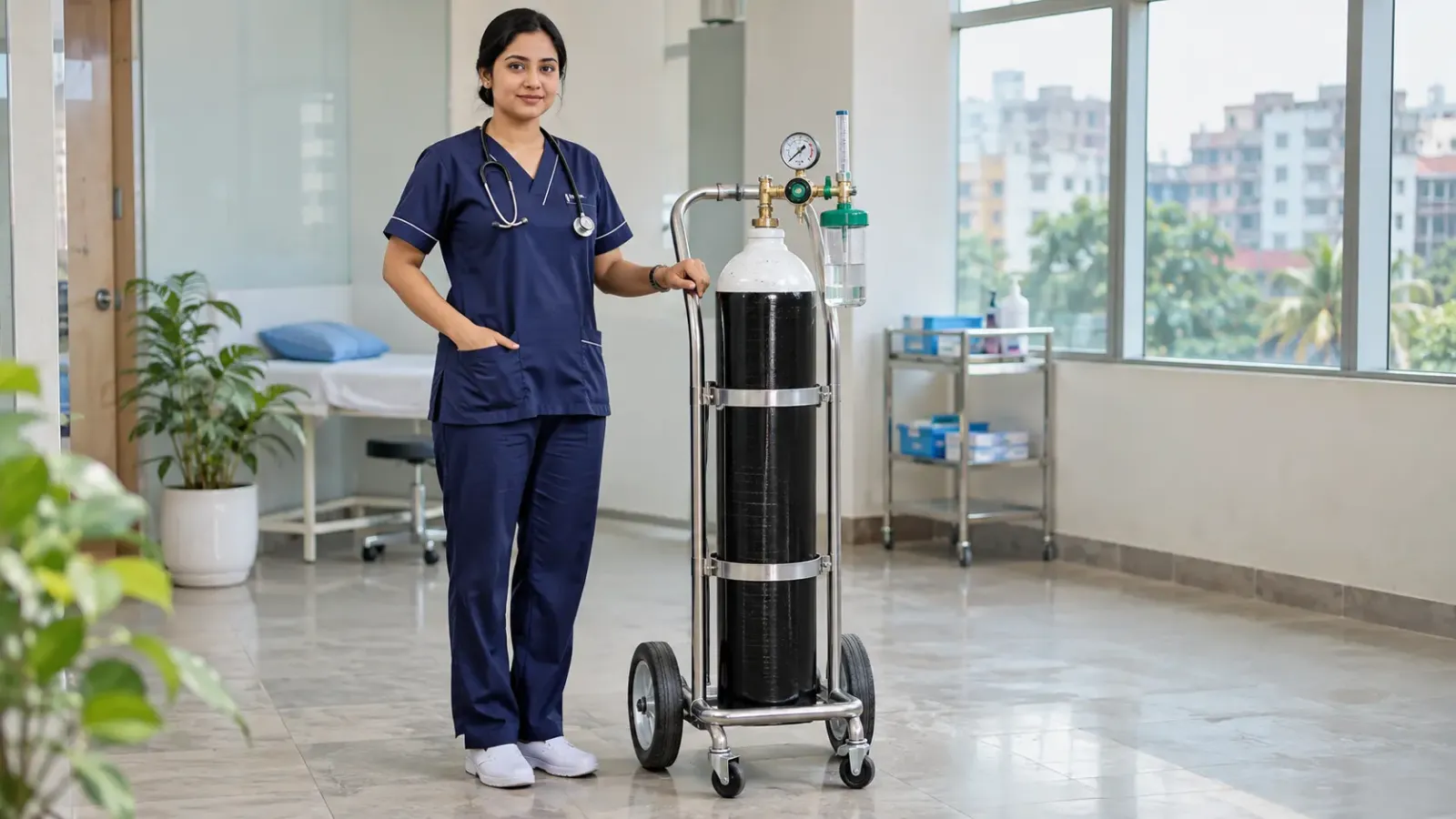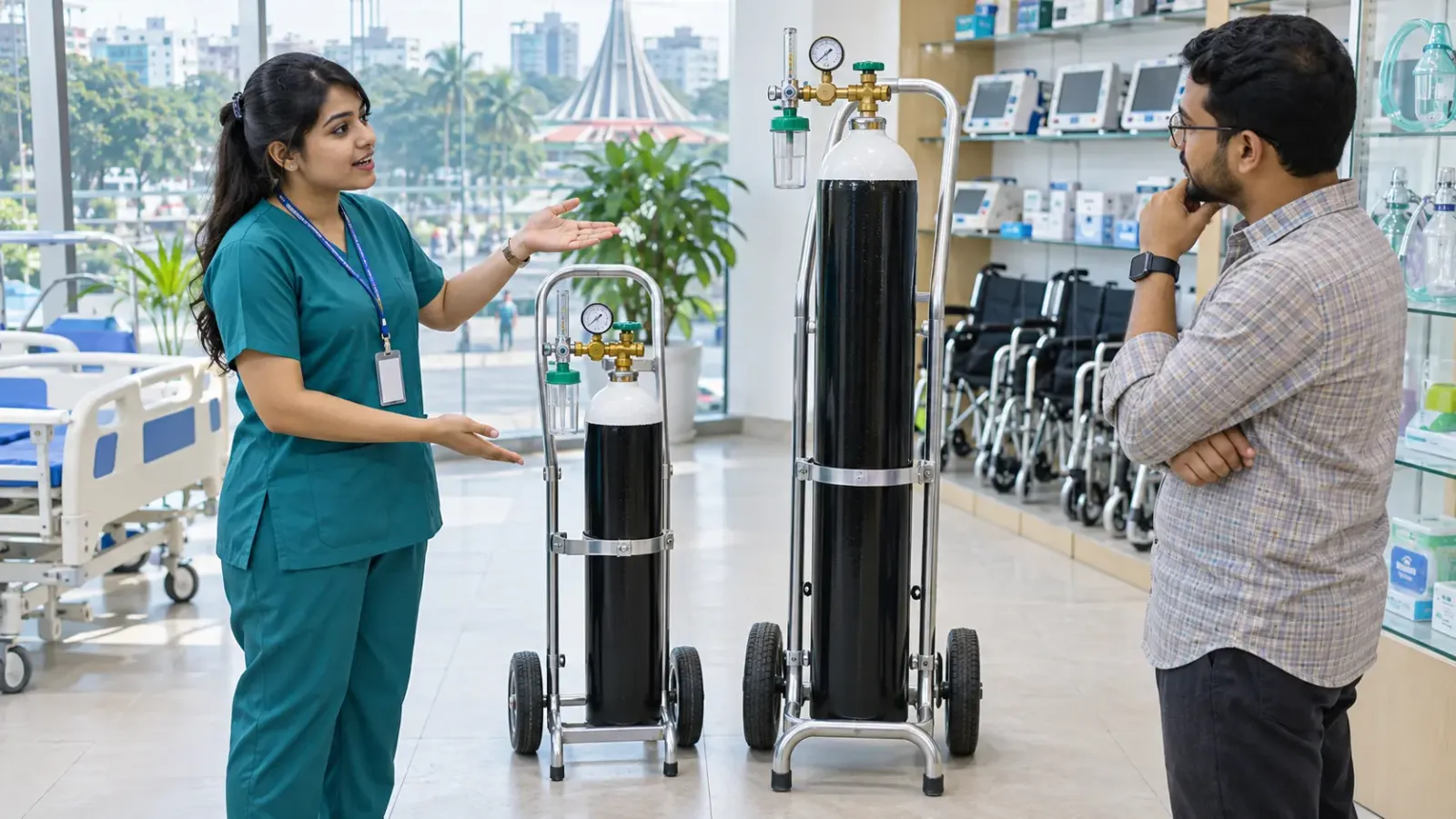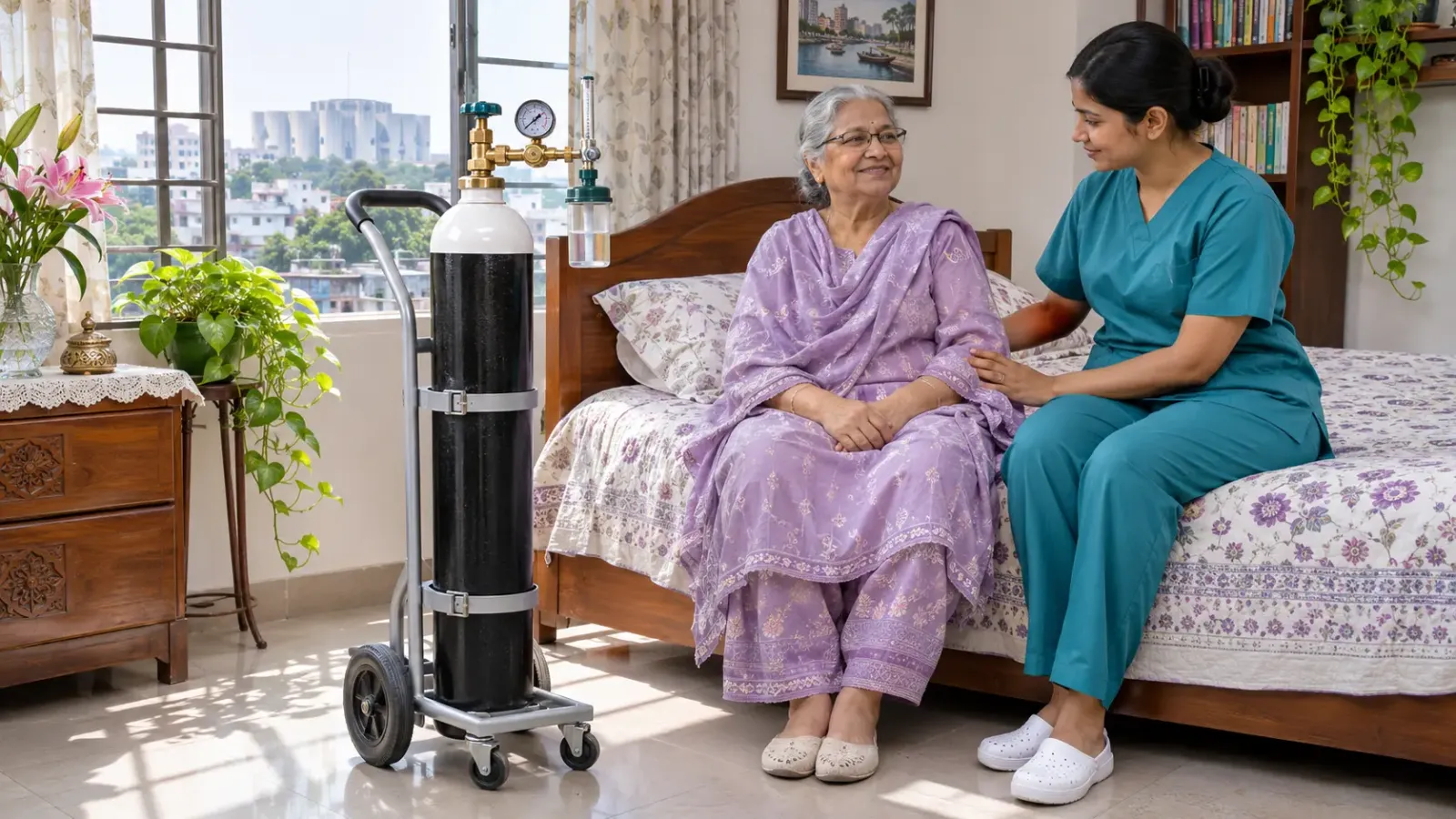
Oxygen Cylinder: Types, Uses, Benefits, Safety & Buying Guide
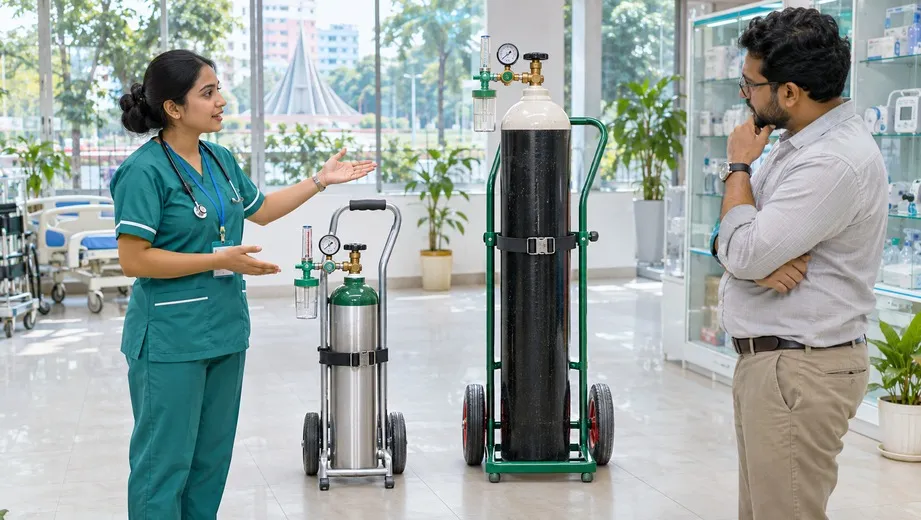
Oxygen Cylinder: Types, Uses, Benefits, Safety Tips, and Complete Buying Guide
An oxygen cylinder is an essential medical device used to store and supply oxygen to patients who require supplemental oxygen therapy. It plays an important role in hospitals, emergency medical services, ambulances, and home healthcare environments.
For people experiencing low blood oxygen levels, a medical oxygen cylinder can provide a reliable source of supplemental oxygen when prescribed by a healthcare professional.
Oxygen cylinders are available in different sizes and designs, including portable oxygen cylinders and larger stationary models. Choosing the right equipment requires an understanding of oxygen requirements, cylinder capacity, safety features, and proper handling procedures.
In this comprehensive oxygen cylinder guide, we will explore how oxygen cylinders work, their different types, benefits, common medical uses, maintenance requirements, and essential safety precautions.
What Is an Oxygen Cylinder?
An oxygen cylinder is a specially manufactured, high-pressure container designed to store compressed oxygen gas.
Medical oxygen cylinders supply oxygen for patients who need higher oxygen concentrations than those available in normal room air.
These cylinders are commonly connected to compatible regulators, flowmeters, and oxygen delivery devices.
How Does an Oxygen Cylinder Work?
A medical oxygen cylinder stores oxygen gas under high pressure.
A compatible regulator reduces the pressure to a level suitable for the oxygen delivery system.
A flowmeter or integrated control system then helps deliver oxygen at the prescribed flow rate.
Oxygen may reach the patient through a nasal cannula, oxygen mask, or another medically appropriate delivery device.
Because oxygen cylinders contain high-pressure gas, proper equipment selection and professional instruction are essential.
Different Types of Oxygen Cylinders
Medical oxygen cylinders come in different sizes, materials, and configurations.
Understanding the available types can help users select equipment that meets their prescribed oxygen requirements.
1. Portable Oxygen Cylinder
A portable oxygen cylinder is designed to support mobility and transportation.
These cylinders are often smaller and can be carried using an approved bag, trolley, or carrying system.
Benefits of Portable Oxygen Cylinders
- Easier transportation than larger stationary cylinders
- Useful for medically prescribed oxygen during travel
- Suitable for certain short outings
- Can provide backup oxygen when appropriately planned
- Available in different capacities
Actual operating duration depends on cylinder capacity, remaining pressure, prescribed flow rate, and delivery equipment.
2. Large Medical Oxygen Cylinder
Large oxygen cylinders are commonly used in hospitals, healthcare facilities, and certain home oxygen arrangements.
They store more oxygen than many portable models but can be heavy and difficult to transport.
These cylinders require appropriate securing equipment and safe storage arrangements.
3. Aluminum Oxygen Cylinder
Aluminum oxygen cylinders are manufactured using suitable aluminum alloys.
Some aluminum models offer reduced weight compared with steel cylinders of similar intended use.
They are commonly used where portability and manageable equipment weight are important.
4. Steel Oxygen Cylinder
Steel oxygen cylinders are strong, pressure-rated containers commonly used in medical and industrial settings.
Medical oxygen cylinders must meet the applicable requirements for medical gas service.
Their weight and durability depend on construction, dimensions, and design.
5. Integrated Valve Oxygen Cylinder
Some oxygen cylinders feature an integrated valve assembly with built-in pressure and flow-control components.
These systems can simplify certain handling tasks, but their controls vary by manufacturer.
Only trained individuals should operate them according to the supplied instructions.
Common Medical Uses of Oxygen Cylinders
Medical oxygen cylinders are used in different healthcare situations where supplemental oxygen is clinically required.
Oxygen Cylinders for Home Use
Home oxygen therapy may be prescribed when a person's blood oxygen levels are too low.
Some patients require oxygen for extended periods, while others need it during particular activities or circumstances.
The prescribing clinician determines whether oxygen therapy is appropriate and how it should be delivered.
Oxygen Cylinders in Hospitals
Hospitals use medical oxygen as part of patient care, including respiratory treatment, emergency management, and certain medical procedures.
Cylinders may serve as portable supplies or backup sources when appropriate.
Oxygen Cylinders in Ambulances
Ambulances and emergency medical teams use oxygen cylinders to support patients who require supplemental oxygen during assessment and transportation.
Oxygen administration should follow clinical protocols and patient needs.
Oxygen Cylinders for Respiratory Conditions
Certain patients with conditions such as chronic obstructive pulmonary disease (COPD), interstitial lung disease, or other illnesses associated with low blood oxygen may require supplemental oxygen.
However, not everyone with these conditions needs oxygen therapy.
Eligibility depends on clinical assessment and oxygen measurements.
Benefits of Using an Oxygen Cylinder
Medical oxygen cylinders offer several practical advantages when used appropriately.
1. Reliable Oxygen Supply
An oxygen cylinder provides a stored supply of compressed oxygen without requiring electricity during normal operation.
This can make it useful in some emergency and backup situations.
2. Portable Options
Smaller cylinders can support users who need prescribed oxygen away from a fixed oxygen source.
Suitable carrying equipment can improve transportation convenience.
3. Useful During Power Outages
A cylinder can serve as an appropriate backup source for some people using electrically powered oxygen concentrators.
Backup arrangements must be planned with a healthcare professional and oxygen supplier.
4. Different Capacity Options
Oxygen cylinders are available in various capacities.
This allows healthcare providers and suppliers to select equipment according to oxygen needs and expected use.
5. Emergency Medical Applications
Medical oxygen cylinders are widely used in emergency healthcare settings when oxygen therapy is indicated.
They can help ensure oxygen availability during patient transportation and treatment.
Oxygen Cylinder vs Oxygen Concentrator
Understanding the differences between an oxygen cylinder and an oxygen concentrator is important when choosing an oxygen delivery system.
FeatureOxygen CylinderOxygen Concentrator
Oxygen Source | Stored compressed oxygen | Concentrates oxygen from ambient air
Electricity | Generally not needed to deliver stored oxygen | Requires electricity or battery power
Refilling | Requires authorized refill or exchange | Usually does not require cylinder refilling
Portability | Depends on cylinder size | Depends on concentrator design
Oxygen Supply | Limited by remaining cylinder contents | Depends on power and device operation
Maintenance | Cylinder and delivery-equipment checks | Filters and equipment servicing
Common Use | Portable, medical, and backup supply | Home and portable oxygen therapy
Which Is Better: Oxygen Cylinder or Concentrator?
Neither system is ideal for every patient.
A stationary oxygen concentrator may be practical for certain long-term home oxygen requirements.
An oxygen cylinder may be helpful for prescribed portable use or as a backup oxygen source.
Some patients use a combination of oxygen delivery systems.
The choice should be based on clinical requirements, oxygen prescription, mobility, equipment specifications, and professional advice.
How to Choose the Right Oxygen Cylinder
Selecting a medical oxygen cylinder involves several important considerations.
Consider Cylinder Capacity
Cylinder capacity affects how much usable oxygen is available.
Smaller cylinders are easier to transport but generally contain less oxygen.
Larger cylinders provide greater storage capacity but may require specialized handling and transportation equipment.
Check Medical-Grade Certification
Choose cylinders and oxygen supplies intended and approved for medical use under applicable local requirements.
Never substitute industrial oxygen or an unidentified gas cylinder for prescribed medical oxygen.
Review Regulator Compatibility
Oxygen cylinders require appropriate pressure-control equipment.
Not every regulator is compatible with every cylinder valve.
Only use regulators and accessories confirmed as compatible by the manufacturer or authorized supplier.
Consider Portability
If a patient needs oxygen outside the home, consider the weight of the cylinder and the suitability of its carrying arrangement.
Choose approved carriers that keep the cylinder secure.
Evaluate Supplier Reliability
Select a supplier that provides appropriate medical oxygen, verified equipment, refill or exchange services, and user instructions.
Availability of replacement parts and emergency support may also be important.
How to Use an Oxygen Cylinder Safely
Medical oxygen cylinders should only be used according to the manufacturer's instructions and the patient's oxygen prescription.
Step 1: Confirm the Prescription
Ensure that oxygen therapy has been prescribed or directed by a qualified healthcare professional.
Confirm the prescribed delivery method and flow settings.
Step 2: Inspect the Equipment
Check the cylinder label, pressure indicator, and accessible components.
Look for signs of damage, leakage, or unsuitable connections.
Do not use damaged equipment.
Step 3: Secure the Cylinder
Position the cylinder in a suitable approved stand, trolley, or restraint system.
Prevent it from falling, rolling, or being struck.
Step 4: Follow the Supplier's Operating Instructions
Have a trained healthcare professional or oxygen supplier demonstrate the correct operation of the cylinder and regulator.
Valve-opening procedures vary between equipment designs.
Never force connections or attempt improvised repairs.
Step 5: Monitor Oxygen Delivery
Use the prescribed oxygen settings and delivery device.
Do not independently increase or decrease the oxygen flow.
If oxygen delivery fails or the patient experiences severe breathing difficulty, seek urgent medical assistance.
Essential Oxygen Cylinder Safety Tips
Oxygen cylinders require careful handling because they contain compressed gas and can intensify fires.
Keep Oxygen Away From Flames
Oxygen itself is not flammable, but it supports combustion.
Smoking, candles, open flames, and other ignition sources create significant risks in oxygen-enriched environments.
Never smoke or allow others to smoke where oxygen equipment is being used.
Avoid Oil and Grease
Oil, grease, and petroleum-based products can create serious fire hazards when they contact oxygen equipment.
Never apply lubricants to oxygen cylinder valves, regulators, or connectors unless specifically authorized by the equipment manufacturer.
Store Cylinders Securely
Use approved cylinder holders or restraints.
Protect cylinders from falling, impact, and unauthorized handling.
Store them according to the supplier's instructions and applicable safety standards.
Keep Equipment Away From Heat
Do not store oxygen cylinders near stoves, heaters, open flames, or other excessive heat sources.
Follow the manufacturer's temperature limits.
Never Modify Cylinder Equipment
Do not change cylinder valves, regulator connections, or pressure-related components.
Repairs and pressure testing should be performed by authorized professionals.
Oxygen Cylinder Maintenance Tips
Regular inspections help ensure that oxygen cylinders and their accessories remain suitable for use.
Check for Visible Damage
Inspect accessible surfaces for dents, corrosion, damaged valves, or unusual wear.
A damaged cylinder should be taken out of service and assessed by the supplier.
Inspect the Regulator
Check for visible damage and confirm that the installed equipment matches the manufacturer's requirements.
Do not dismantle or attempt to repair the regulator yourself.
Monitor the Remaining Oxygen
Use the cylinder's approved pressure indicator or contents display to check the remaining oxygen supply.
Plan replacement or exchange before the prescribed supply is exhausted.
Keep Equipment Clean
Follow the manufacturer's instructions for cleaning external surfaces.
Avoid unapproved cleaning chemicals and never allow oil or grease to contaminate oxygen connections.
Schedule Professional Inspection
Authorized providers should perform required cylinder inspections, periodic pressure testing, servicing, and refilling.
Never attempt to refill a medical oxygen cylinder using an unauthorized compressor or other improvised equipment.
Proper Oxygen Cylinder Storage
Correct storage protects both users and equipment.
Choose a Suitable Storage Area
Store cylinders in a well-ventilated location that meets applicable safety requirements.
Keep them away from heat, ignition sources, and potentially hazardous materials.
Prevent Accidental Falls
Use approved stands, racks, or restraints.
Do not leave cylinders where they may roll or obstruct exits.
Separate Cylinders Appropriately
Follow supplier guidance for identifying and organizing full, partially used, and empty cylinders.
Do not rely solely on cylinder color to identify the gas.
Follow Transportation Guidelines
Secure cylinders during transportation using approved arrangements.
Never leave cylinders loose inside a vehicle.
Ask your oxygen supplier about vehicle-specific handling requirements before traveling.
Oxygen Cylinder Price and Buying Considerations
The price of an oxygen cylinder varies according to its capacity, construction material, accessories, supplier, and market.
Portable oxygen cylinders may have different prices from larger stationary models.
Some suppliers offer rental or cylinder-exchange services rather than outright ownership.
Before purchasing, consider:
- Cylinder size and capacity
- Medical oxygen certification
- Included regulator and accessories
- Refill or exchange availability
- Transportation requirements
- Supplier warranty and support
- Total long-term operating costs
Always prioritize medical suitability and safety rather than selecting equipment based only on price.
Oxygen Cylinder Use in Bangladesh
Medical oxygen cylinders are used in hospitals, clinics, ambulances, and home healthcare settings throughout Bangladesh.
Patients and caregivers should obtain medical oxygen through reliable healthcare providers and authorized suppliers.
Choosing an Oxygen Cylinder in Bangladesh
Before arranging an oxygen cylinder in Bangladesh, confirm the medical prescription, cylinder capacity, compatible regulator, and availability of refilling or exchange services.
Ask the supplier to demonstrate safe use and explain what to do when the cylinder is nearly empty or equipment malfunctions.
Home Oxygen Safety in Bangladesh
Homes may have limited space, and electricity interruptions can affect electrically powered medical equipment.
A clinician and oxygen supplier can help determine whether a backup oxygen arrangement is appropriate.
Keep cylinders away from cooking flames, smoking areas, and heat sources.
Never store cylinders unsecured in crowded passageways or beside potential ignition sources.
Frequently Asked Questions (FAQs)
1. What is an oxygen cylinder used for?
An oxygen cylinder stores compressed oxygen for medical and other specialized applications. Medical oxygen cylinders supply supplemental oxygen to patients when clinically prescribed.
2. Can an oxygen cylinder be used at home?
Yes. Medical oxygen cylinders may be used at home when prescribed by a qualified healthcare professional and supplied with appropriate equipment, training, and safety arrangements.
3. How long does an oxygen cylinder last?
The duration depends on cylinder capacity, remaining pressure, prescribed oxygen flow, and the delivery system. Your oxygen supplier can explain the expected duration for your specific setup.
4. Is an oxygen cylinder better than an oxygen concentrator?
Both have advantages. Oxygen cylinders store a limited supply of compressed oxygen, while concentrators use electrical power to produce oxygen-enriched gas. The appropriate choice depends on the patient's needs.
5. Are oxygen cylinders safe?
Medical oxygen cylinders can be used safely when properly prescribed, maintained, secured, and operated. Incorrect handling, damaged equipment, and exposure to ignition sources create serious hazards.
6. Can I refill an oxygen cylinder at home?
No. Medical oxygen cylinders should only be refilled or exchanged through authorized providers using approved equipment and procedures.
7. What is the difference between portable and large oxygen cylinders?
Portable cylinders are generally smaller and easier to transport. Larger cylinders typically store more oxygen but are heavier and require appropriate handling equipment.
8. Do oxygen cylinders need electricity?
Compressed oxygen cylinders generally do not require electricity to deliver stored oxygen through compatible pressure-control equipment. Some connected medical devices may still need power.
9. How should an oxygen cylinder be stored?
Store it securely in a suitable ventilated area, protected from excessive heat, flames, physical damage, and unauthorized use. Follow the supplier's specific storage instructions.
10. Where can I buy an oxygen cylinder in Bangladesh?
Medical oxygen cylinders may be available through authorized medical gas suppliers and healthcare equipment providers. Confirm medical-grade oxygen, equipment compatibility, refill support, and safety instructions before purchase.
Conclusion
An oxygen cylinder is an important medical oxygen delivery option that can support patients who require prescribed supplemental oxygen.
From portable oxygen cylinders to larger medical oxygen cylinders, different configurations serve different clinical and practical needs.
Understanding oxygen cylinder types, safety requirements, maintenance procedures, and storage guidelines helps patients and caregivers make informed decisions.
Whether oxygen is required in a hospital, during transport, or at home, proper medical supervision and reliable equipment are essential.
Always follow professional oxygen therapy instructions, use approved accessories, and arrange servicing through authorized suppliers.
Safe oxygen cylinder use begins with the right medical prescription, suitable equipment, and proper training.