Long-term patient care is not just about medication and checkups. The right hospital bed can improve comfort, reduce caregiver strain, support safer positioning, and help prevent pressure-related complications when a patient spends many hours in bed. Clinical guidance on pressure injury prevention consistently emphasizes repositioning and the use of appropriate support surfaces as part of care, especially for people with limited mobility.
That is why many families, caregivers, and healthcare providers in Bangladesh compare a manual hospital bed with an adjustable hospital bed before making a purchase. The choice affects daily comfort, independence, long-term safety, and overall cost. If you are searching for a hospital bed in Bangladesh, understanding the differences first can save both money and stress later.
In this guide, we will break down the pros and cons of each option, explain how pricing works, and help you decide which hospital bed is best for long-term patient care at home or in a medical setting.
What Is a Hospital Bed?
A hospital bed is a specially designed bed that supports patient care better than a regular home bed. It usually includes features like height adjustment, backrest elevation, side rails, wheels, and a mattress designed for comfort and pressure distribution. In long-term care, these features can make moving, feeding, cleaning, and repositioning much easier. Clinical guidance also shows that repositioning and pressure-redistributing surfaces are important tools in reducing pressure ulcer risk.
For home care, the right bed can be especially important when the patient has limited movement, is recovering from surgery, is elderly, or needs daily assistance. That is why many families now search for the best hospital beds for home use rather than relying on a regular bed frame.
Adjustable Hospital Bed vs. Manual Hospital Bed
1) Adjustable Hospital Bed
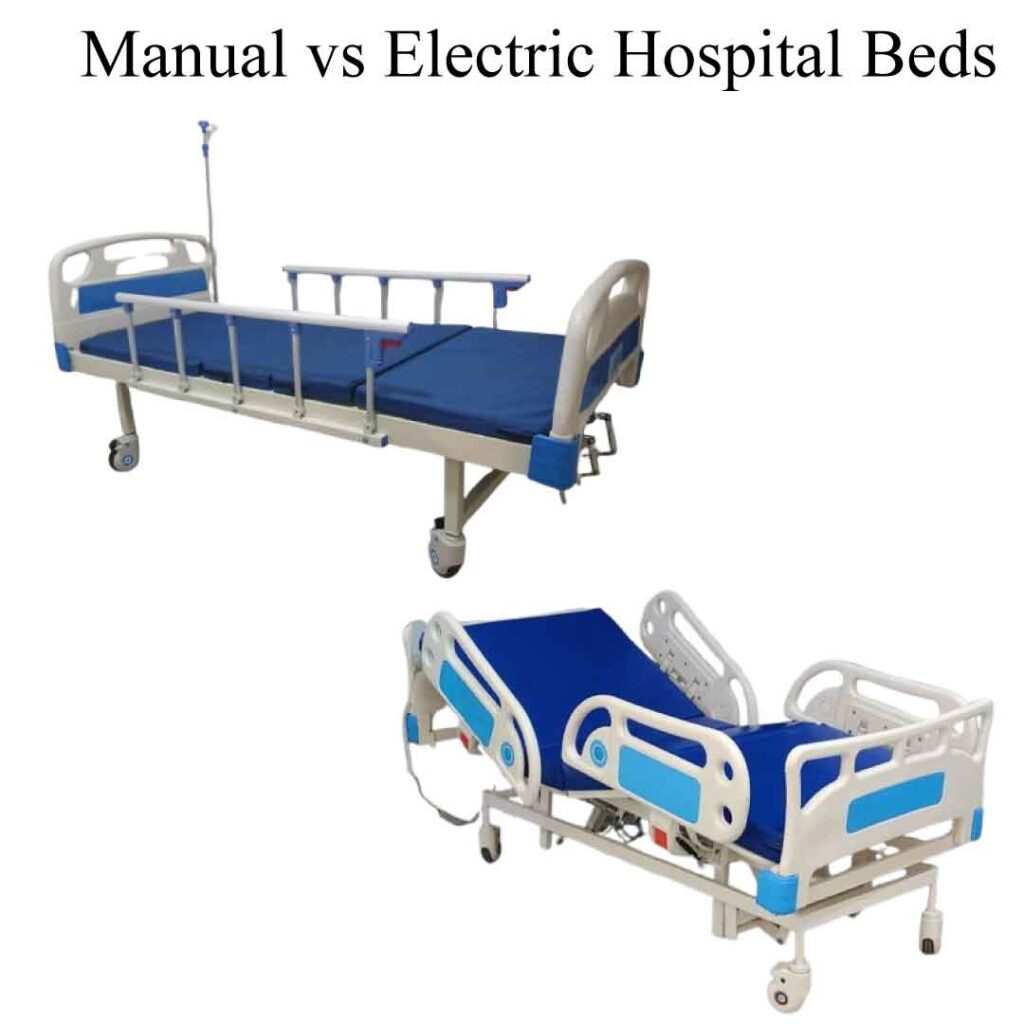
An adjustable hospital bed allows the user or caregiver to change the position of the head, legs, and sometimes the full height of the bed. In many models, these changes happen with electric controls, which is why people also call them an automatic hospital bed. Adjustable beds are especially helpful in long-term care because the patient can rest more comfortably, sit up more easily, and switch positions without as much physical effort. For patients with limited mobility, the ability to change position matters a lot. Medical guidance on pressure injury prevention recommends frequent repositioning and the use of support surfaces to reduce pressure on vulnerable areas of the body. An adjustable bed makes those tasks easier to manage day after day.
2) Manual Hospital Bed
A manual hospital bed uses hand cranks or mechanical systems to adjust the bed position. It does not depend on electric motors, so it is usually more affordable and may have lower running costs. For families with a limited budget, a manual model can still provide important care benefits, especially if the patient does not need frequent changes in position throughout the day. Manual beds are often chosen for basic home care, short-term recovery, or situations where electricity access is unreliable. They can still support patient repositioning, but caregivers must do more physical work to make adjustments. For long-term use, that extra effort becomes an important factor.
Key Differences at a Glance
An adjustable bed focuses on convenience, patient comfort, and easier caregiver support. A manual bed focuses on affordability and simplicity. In many cases, the best choice depends on how long the patient will need the bed, how often the position must change, and how much assistance is available at home.
Here is the practical way to think about it:
- If the patient needs frequent position changes, an adjustable model is usually more convenient.
- If the care budget is tight, a manual model may be the better starting point.
- If a caregiver must do most of the lifting and repositioning, electric adjustment can reduce daily effort.
- If you are looking for long-term comfort and a more home-like care experience, adjustable beds often provide more value over time.
Why Long-Term Patient Care Needs the Right Bed
Long-term patient care often means many hours, days, or months in bed. That can create problems such as discomfort, stiffness, poor sleep, caregiver fatigue, and pressure injuries. Clinical guidance from NICE and other pressure injury resources emphasizes positioning, frequent repositioning, and pressure-redistributing support surfaces to lower these risks.
A good hospital bed helps in several ways:
- It supports better posture during rest and recovery.
- It makes feeding and reading in bed more comfortable.
- It allows safer transfers and easier nursing care.
- It helps caregivers reposition the patient with less strain.
- It can improve overall dignity and quality of life for home-bound patients.
For this reason, the bed should not be chosen only by price. The goal is to match the bed to the patient’s medical needs, daily routine, and caregiving environment.
Advantages of an Adjustable Hospital Bed
Better Comfort for the Patient
An adjustable model lets the patient sit up for meals, conversation, TV, or medication without needing extra pillows stacked behind the back. This is especially useful for people who spend a long time in bed and need small changes in posture during the day.
Easier Repositioning
Guidelines for pressure injury prevention emphasize changing position frequently and using appropriate support surfaces. An adjustable bed makes this process easier because the head, back, or legs can be raised or lowered to help redistribute pressure.
Less Physical Work for Caregivers
For a home caregiver, manual repositioning can be tiring, especially if the patient is heavy or weak. A powered automatic hospital bed can reduce repeated bending and cranking, making day-to-day care easier and safer for the helper.
More Suitable for Long-Term Use
If the patient will use the bed for months or years, the comfort and flexibility of an adjustable model often justify the extra cost. This is one reason adjustable beds are often recommended among the best hospital beds for home use.
Advantages of a Manual Hospital Bed
Lower Purchase Cost
The biggest advantage of a manual model is price. Listings in Bangladesh show that hospital bed price in Bangladesh can vary widely based on functions, materials, and build quality. Simpler beds may appear at lower price points, while multi-function beds cost significantly more.
Simpler Design
A manual bed has fewer electronic components, which may appeal to buyers who want a straightforward setup. This can be useful in places where electricity supply is uncertain or where the bed will be used only occasionally.
Good for Basic Care Needs
Not every patient needs powered elevation and frequent daily changes in bed angle. For short-term recovery or less demanding situations, a manual bed may provide enough support at a lower cost.
Which Hospital Bed Is Better for Long-Term Patient Care?
For most long-term care situations, an adjustable hospital bed is the better option. The reason is simple: long-term patients usually need more than a place to sleep. They need a safer, more flexible setup that helps with repositioning, feeding, hygiene, and comfort throughout the day. Clinical recommendations on pressure injury prevention strongly support repositioning and the use of pressure-redistributing surfaces, and adjustable beds make those routines easier to maintain. (
That said, a manual bed can still be a smart choice if:
- the patient needs basic support only,
- the care budget is limited,
- the bed will be used temporarily,
- or the caregiver is comfortable handling manual adjustments.
So the real answer is not “which bed is best for everyone?” The real answer is: choose the bed that fits the patient’s daily care needs, not just the lowest price.
Hospital Bed Price in Bangladesh: What Affects the Cost?
When people search for hospital bed price in Bangladesh, they usually notice that prices vary a lot. That is because the final cost depends on several factors, including the number of functions, frame material, motor system, side rails, caster quality, mattress type, and accessories. Listings from Bangladeshi marketplaces show wide pricing gaps between manual beds and multi-function beds.
In practical terms:
- Basic manual beds are usually the most affordable.
- Adjustable models cost more because of added mechanisms and motors.
- Higher-end beds with multiple functions, stronger frames, and better accessories cost more again.
For buyers in Bangladesh, it is best to compare not only the headline price but also the included mattress, warranty, delivery, after-sales support, and replacement parts. A bed that looks cheaper at first may cost more later if accessories are missing.
Should You Buy or Rent a Hospital Bed?
A lot of families search for hospital bed rental near me or hospital bed rental when the need is temporary. Renting can be a good idea after surgery, during recovery from injury, or when the patient may not need the bed for a long period. It reduces upfront cost and avoids storage problems later. This is often practical for short-term care.
Buying makes more sense when:
- the patient needs long-term support,
- there is ongoing mobility limitation,
- the bed will be used every day,
- or the family wants a permanent home-care solution.
If you are unsure, compare the total rental cost for the expected care period against the purchase price. In many long-term cases, buying becomes more economical over time.
How to Choose the Best Hospital Beds for Home Use
Choosing the right bed for home care is easier when you focus on the patient’s actual routine. The best hospital beds for home use are usually the ones that combine safety, comfort, and easy cleaning. They should also match the caregiver’s ability to operate the bed without trouble.
Look for these features:
- Adjustable backrest and leg section
- Sturdy side rails
- Smooth wheels with locking brakes
- Easy-to-clean surface
- Compatible pressure-relief mattress
- Strong frame and reliable weight capacity
- Good support from the seller after purchase
If the patient is expected to stay in bed for many weeks or months, an adjustable model is often the more practical choice. It can help with comfort in the morning, support during meals, and better positioning at night.
Manual or Adjustable: Which One Should You Choose?
Choose a manual hospital bed if you need a lower-cost solution, the care period is short, and the patient does not need frequent adjustments. Choose an adjustable hospital bed if you want better comfort, easier caregiving, and a more suitable long-term care setup.
For long-term patient care, the adjustable option usually wins because it reduces strain and supports better positioning habits. But if budget is the main concern, a manual bed still gives essential support.
Why BD Medical Store Is the Right Place to Compare Options
At BD Medical Store, it makes sense to compare all major hospital bed options in one place so you can see the differences in function, comfort, and cost. A good buying experience should help you evaluate the product, not pressure you into the most expensive choice. That is especially important when you are choosing medical furniture for a loved one.
You can also create a simple comparison path on your website, such as:
- Hospital Bed Collection
- Adjustable Hospital Bed Options
- Manual Hospital Bed Options
- Hospital Bed Price in Bangladesh
- Hospital Bed Rental
Those internal links can help visitors find the right product faster and improve SEO by keeping related pages connected.
Conclusion
When it comes to long-term patient care, the better hospital bed is usually the one that supports comfort, safer positioning, and easier caregiving over time. A manual hospital bed is affordable and practical for basic or short-term use. An adjustable hospital bed is often the stronger choice for long-term care because it supports frequent repositioning, reduces caregiver strain, and improves the patient’s daily comfort. Clinical guidance on pressure injury prevention reinforces the importance of repositioning and suitable support surfaces, which makes adjustability a major advantage in extended care.
If you are comparing hospital bed in Bangladesh options, do not focus only on the first price you see. Think about the patient’s mobility, the care period, the home environment, and whether renting or buying makes more sense. For many families, the extra comfort of an adjustable or automatic model is worth it in the long run.
FAQ:
- What is the main difference between an adjustable hospital bed and a manual hospital bed?
An adjustable hospital bed uses a motor or remote control to change positions, while a manual hospital bed requires physical effort to adjust. - Which hospital bed is better for long-term patient care?
An adjustable hospital bed is usually better for long-term care because it offers more comfort, convenience, and easier position changes. - Is a manual hospital bed still a good choice for home care?
Yes, a manual hospital bed can be a practical option if the patient does not need frequent position changes and the budget is limited. - Are adjustable hospital beds worth the higher price?
Yes, for many patients they are worth it because they reduce caregiver strain and improve patient comfort over time. - Which bed is easier for caregivers to use?
An adjustable hospital bed is easier for caregivers because it saves time and reduces the need for lifting or repositioning manually. - Can a manual hospital bed be used for bedridden patients?
Yes, but it may be less convenient for bedridden patients who need frequent posture changes, feeding support, or pressure relief. - Which bed is more comfortable for the patient?
An adjustable hospital bed is generally more comfortable because the patient can sit up, lie down, or elevate legs more easily. - Do adjustable hospital beds help prevent pressure sores?
Yes, they can help reduce pressure buildup by allowing regular position changes and better body support. - Which option is better for short-term recovery?
A manual hospital bed may be enough for short-term recovery, especially if the patient’s needs are basic and temporary. - How do I choose between adjustable and manual hospital beds?
Consider the patient’s condition, how long the bed will be used, caregiver support, comfort needs, and budget.